مقاله

از حوزه حقوق بشر – سمینار نقض بی پایان حقوق بشر در ایران

شماره صد و سوم، جمعه چهاردهم ارديبهشت ماه ١٣۸٦
محمد تهوری- واشنگتن پریزم
“چه باید کرد؟” این پرسش روز جمعه ٢۷ آوریل (۷ اردیبهشت) از سوی “دکتر استیو مارک” از اساتید و اعضای “کمیته حقوق بشر دانشگاه هاروارد” آمریکا، در سمیناری مطرح شد که در همین دانشگاه برگزار گردید.
پرسش مذکور پس از ٣ ساعت بحث و تبادل نظر پیرامون نقض حقوق بشر در ایران، عنوان شد. سوألی که سالهاست پس از هر نشست و گفتگویی در مورد وضعیت این حقوق در ایران مطرح می شود، ولی پاسخی در خور نمی یابد.
تعدادی از نمایندگان نهادهای بین المللی و سازمان های جهانی غیر دولتی فعال در زمینه حقوق بشر نیز، در این سمینار حضور داشتند. بنابراین، این استاد در واقع با طرح چنین پرسشی بیش از پیش نهادها و سازمان های مذکور را متوجه این نکته ساخت، که وقت آن رسیده تا برای پایان دادن به نقض حقوق بشر در ایران، اقدامی جمعی صورت گیرد.
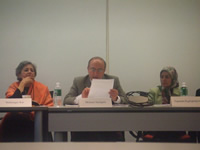

مهر انگیز کار (سمت چپ): "هر حرکت زنان، ضدیت با
اسلام تعبیر می شود."

نسخه آماده این استاد دانشگاه، توسل به کنوانسیون های بین المللی و اتحادیه ها و سازمانهای جهانی بود، که ایران به آنها ملحق شده است. او از این که ایران به شماری از کنوانسیون های بین المللی ملحق شده، به نیکی یاد کرد و گفت که این کنوانسیون ها از ضمانت اجرایی خوبی برای توقف نقض حقوق بشر برخوردارند.
وی از کنوانسیون منع شکنجه، کنوانسیون حقوق کودکان، کنوانسیون منع تبعیض آموزشی، اتحادیه بین المللی کارگران و … به عنوان مجامعی نام برد، که ایران الحاق به آنها را امضاء کرده است. او گفت با طرح موارد نقض حقوق بشر در این مجامع، می توان از توانایی بالقوه آنها برای جلوگیری از تکرار نقض حقوق بشر در ایران استفاده کرد.
او در عین حال گفت که افکار عمومی آمریکا به دریافت اخبار و تحلیل های بیشتر و واقعی نسبت به مسایل ایران، نیاز دارد. (چرا که در این صورت) سیاست خارجی امریکا مکلف می شود ضمن پیگیری مساله حقوق بشر در ایران، به گونه ای در مورد این کشورتصمیم گیری کند که اقداماتش به پیشرفت حقوق بشر در آن لطمه نزند.
وی حمایت سازمان های بین المللی از جنبش های اجتماعی در ایران را، راه دیگری برای پیگیری و احیای حقوق بشردر این کشور برشمرد. او خاطر نشان کرد که به رغم محدودیت های بسیار، ویژگی های مثبتی در ایران وجود دارد. ویژگی هایی که می توان با استفاده صحیح از آنها، به پیشبرد حقوق بشر کمک کرد.
مارک از حداقل امکان برای انتقال اخبار و تحلیل ها از طریق وبلاگ ها و تارنماها به داخل ایران، حداقلی از تعهد رسمی به مساله حقوق بشر از سوی حاکمیت، جامعه مدنی درگیر با مساله حقوق بشر -از جمله تشکل های کارگری، دانشجویی و زنان-، وجود برخی اصول مثبت در قانون اساسی، و عضویت ایران در برخی از کنوانسیون های بین المللی، به عنوان نقاط مثبت در ایران یاد کرد.
وی درعین حال از تلفیق دین و سیاست، محدود بودن دایره امنیت ملی -به طوری که هر اقدامی مخل امنیت ملی تشخیص داده می شود-، و موارد مشابه در سیستم قضایی به عنوان برخی از نکات منفی یاد کرد. او ابراز امیدواری کرد که با تبلیغ و ترویج تفسیری از اسلام منطبق با حقوق بشر و دمکراسی، بتوان به بهبود وضعیت حقوق بشر در ایران کمک کرد.
به گفته استیو مارک تمرکز روی حق انتشار آزاد مطالب و دیدگاه ها، سازگاری اسلام و حقوق بشر، و برخورداری از ضمانت اجرایی کنوانسیون های بین المللی، راه مناسبی برای پیشبرد دمکراسی در ایران است.
کمک وزارت خارجه امریکا، هدیه به دستگاه های امنیتی ایران برای برخورد با فعالان جامعه مدنی
در این سمینار که به ابتکار “دانشکده جان اف کندی” دانشگاه هاروارد برگزار شد، نمایندگان برخی از سازمان های بین المللی مدافع حقوق بشر نیز، به بررسی وضعیت حقوق بشر در ایران پرداختند.
“هادی قائمی” نماینده “سازمان دیده بان حقوق بشر” در این نشست بود. وی از نسبت دادن اتهام جاسوسی به فعالان جامعه مدنی ایران، انتقاد کرد. او گفت که عادی سازی رابطه ایران و آمریکا، می تواند به روند فشار به فعالان جامعه مدنی ایران به اتهام جاسوسی برای دشمن پایان دهد.
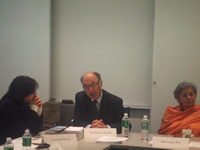

هوشنگ شهابی (نفر میانی): "سنی ها با ۷ تا ١٤ میلیون
نفر جمعیت و به عنوان بزرگترین اقلیت مذهبی در ایران، هنوز به عنوان شهروند
درجه دو محسوب می شوند."

وی عملکرد وزارت خارجه امریکا در اعلام اعطای کمک مالی به سازمان های غیر دولتی ایران را، هدیه امریکا به دستگاه های امنیتی جمهوری اسلامی برای برخورد با فعالان جنبش های اجتماعی ایران دانست.
پیکان انتقاد دیگر قائمی، متوجه تنش هسته ای ایران و غرب بود. او گفت مساله فعالیت های هسته ای ایران آنقدر پررنگ شده، که دیگر نمی توان پیرامون مسائل دیگر سخن گفت. این در حالی است که جنبش های اجتماعی ایران، فعالانه کار خود را دنبال می کنند.
او از جنبش زنان، حقوق دانان، کارگران، معلمان و دانشجویان به عنوان حرکت های پویا و فعال ایران نام برد، و گفت فشارها و تهدیدات دولت احمدی نژاد به انفعال ایرانیان منجر نشده و آنها با وجود فشارها به فعالیت ادامه می دهند.
وی به جنبش زنان به عنوان فعالترین حرکت نگاه کرد، و گفت زنان بسیار موفق هستند. چراکه آنها اهداف عینی را مشخص کرده اند، و به دنبال هدف های انتزاعی نیستند. کما اینکه وقتی از ضرورت قوانین سخن گفتند، تلاش کردند تا قوانین مغایر با حقوق شان را پیدا کنند و برای تغییر آنها بکوشند.
قائمی با اشاره به قتل کوشندگان سیاسی در زندان های جمهوری اسلامی ایران در دهه اول انقلاب، در مورد تغییر سیاست ها در دولت های مختلف سخن گفت. او اظهار داشت “در دولت هاشمی به علت تمرکز وی روی توسعه اقتصادی، دستگاه های امنیتی حذف دگر اندیشان را در دستور کار قرار دادند. ولی دولت خاتمی موفق به تغییر این رویه شد. به طوری که حتی با ترویج اندیشه تحمل مخالف، کوشید فضای مناسبی برای فعالیت جامعه مدنی ایران مهیا کند و در این راه، گام های مثبتی برداشته شد. ولی در ادامه، احمدی نژاد با سیاستی مخالف خط مشی خاتمی، کوشید جامعه مدنی را به انفعال بکشاند. اما هرگز در این کار موفق نبوده است.”
منتقدان ساواک، همان راه را در پیش گرفته اند
“جاشوا روبینستین” نماینده “سازمان عفو بین الملل”، دیگر سخنران میزگرد سازمان های بین المللی مدافع حقوق بشر بود. او با یاد آوری فعالیت های سازمان متبوعش در دفاع از حقوق بشر در ایران، گفت: “این سازمان از سال ۱٩٦٠ (۱٣٣٩) موضوع حقوق بشر ایران را، در دستور کار دارد. در آن موقع ساواک اقدام به زندانی و شکنجه کردن سیاسیون می کرد، و این سازمان پیگیری های بسیاری را انجام داد.”
وی با اشاره به دریافت نامه ها و شکوائیه های زندانیان و مخالفان سیاسی زمان شاه از برخوردهای ساواک در موارد نقض حقوق بشر، تصریح کرد که متاسفانه این عده بعد از به قدرت رسیدن همان اقدامات ساواک را دردستور قرار دادند. با این تفاوت که این بار به نامه های ما در خصوص نقض حقوق بشر، پاسخی ندادند. این درحالی است که حتی آقای (آیت الله) خمینی نیز در دوره شاه، مواردی را به این سازمان ارجاع داد که ما پیگیری کردیم.
این فعال حقوق بشر خاطرنشان کرد “متاسفانه برخورد ایران با اقلیت های قومی فاجعه بار بوده، و هر اعتراضی را با خشونت پاسخ گفته اند. آنها هنوز بر اجرای حکم اعدام و سنگسار اصرار دارند.”
او تلاش سازمان های بین المللی برای آزادی برخی زندانیان سیاسی را موثر دانست. وی در این پیوند گفت: “این تلاش ها و فشارها برای پایان دادن به نقض حقوق بشر ادامه دارد، و ما مطمئن هستیم که دولت ایران به شکایت های بین المللی حساس است و نمی تواند بی تفاوت باشد.”
روبینستین نیز همچون قائمی به انتقاد از اقدامات دولت امریکا پرداخت و گفت که، این سیاست ها نه تنها موثر نیست بلکه فعالان حقوق بشر درایران را بیشتر با مشکل مواجه می کند.
“دنی پوستل” نماینده “انجمن روزنامه نگاران” سومین سخنران این نشست بود. او به خاطره ای از اقدامات بین المللی برای آزادی دکتر رامین جهانبگلو اشاره کرد، که برای مدتی توسط نیروهای امنیتی بازداشت شده بود. وی گفت: “ما برای آزادی رامین جهانبگلو نامه ای نوشتیم، و از تعدادی چهره های سرشناس امضاء جمع کردیم. ولی ماموران امنیتی ایران از این نامه بر علیه او استفاده کردند. آنها با نشان دادن این نامه به جهانبگلو، از ارتباط او با امضاءکنندگان سؤال کرده بودند. این اتفاق ما را به فکر فرو برد که آیا کار ما صحیح بود، یا اشتباه کرده بودیم. ما از بسیاری از روزنامه نگاران و وبلاگ نویسان نیز حمایت کردیم. (ولی) مسأله حقوق بشر در ایران، بسیار حساس است.”
دنی پوستل در پایان با این سوال که “آیا هر حمایت بین المللی می تواند موثر باشد یا نه؟”، شرکت کنندگان را به چالش کشید.


فشارهای اقتصادی، کارگران را به خیابان ها کشانده است
در این سمینار “خانم هبا الشازلی” رئیس بخش خاورمیانه “مرکز همبستگی بین المللی با کارگران در امریکا” نیز، با اشاره به اخراج ها، قرادادهای موقت، حمله به تجمعات مسالمت آمیز و منع برخورداری از حق تشکل های آزاد کارگری، وضعیت اسفناک کارگران در ایران را به تصویر کشید. او تاکید کرد که این وضعیت در ایران، بخش کوچکی از تاثیرات فرآیند جهانی شدن بر کارگران است. بنا براین کارگران چاره ای جز جهانی کردن همبستگی میان خود ندارند.
وی سپس ظرفیت های اتحادیه های بین المللی کارگری و سازمان های جهانی در حمایت از کارگران ایران را، به عنوان بخشی از همبستگی جهانی کارگران دانست. الشازلی توضیح داد که این ظرفیت های بین المللی در ٣ تشکل قابل تعریف هستند. به این مفهوم که فدراسیون های کارگری کشوری و اتحادیه های بین المللی تخصصی وجود دارند که هردو در قالب کنفدراسیون بین المللی اتحادیه های کارگری با بیش از ٣٠٠ میلیون عضو، جای می گیرند. و سرانجام سارمان جهانی کار است که به عنوان بخشی از سازمان ملل، نقش یک نهاد سه جانبه گرا را ایفا می کند.
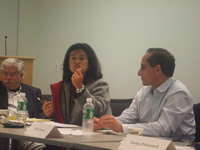

جاشوا روبینستین (سمت راست): "برخورد ایران با اقلیت
های قومی فاجعه بار بوده، و هر اعتراضی را با خشونت پاسخ گفته اند."

شازلی به عنوان نمونه های بهره مندی از ظرفیت های این خانواده بزرگ کارگری در حمایت از کارگران ایران، به نوشتن نامه های اعتراضی به مقامات این کشور در رعایت حقوق بین المللی کار، تشکیل کارزارهای حمایت از کارگران ایران -که نمونه آن برگزاری روز اقدام بین المللی ۱۵ فوریه ٢٠٠٦ (٢٦بهمن۱٣۸٤) برای حمایت از کارگران دستگیر شده شرکت واحد در سراسر جهان بود-، طومارهای اینترنتی، و نهایتا تشکیل پرونده های شکایتی در سازمان جهانی کار، اشاره کرد.
وی گفت که بر اثر این اقدامات، سال گذشته برای ایران پرونده سنگینی تشکیل شد و به همین سبب دولت این کشور در نشست سالیانه ٢٠٠٦ (۱٣۸۵) در ژنو، تلاش کرد که بسیار پر هیبت ظاهر شود. اما به خاطر گزارش هایی که به موقع به سارمان جهانی کار رسیده بود، در کمیته استاندارد مجبور به پاسخگویی شد.
به گفته شازلی امسال نیز فدراسیون آموزش بین المللی در اعتراض به دستگیری های معلمین -که نقض حق آزادی تشکل هاست-، از دولت ایران به سازمان جهانی کار شکایت کرده است. در نتیجه این شکایت، ایران مجبور به ارائه توضیح شده است. به نظر می رسد که به خاطر حوادث بسیار اسفبار علیه حقوق معلمین، “اتحادیه همبستگی تجارت جهانی” و “اتحادیه بین المللی آموزش” مشترکا در تدارک یک شکایت دیگر به سازمان جهانی کار هستند.
از دید وی، به هر جهت به نظر می رسد که ایرا ن به کمک های “سازمان بین الملی کارگران” احتیاج دارد. بنابراین گاهی از این شکایت ها ناخرسند می شود، و فضا را کمی برای کارگران باز می کند. برای نمونه می توان از آزادی بسیاری از کارگران زندانی و یا بررسی وضعیت کارگران منتظر خدمت شرکت واحد، نام برد.
او همچنین با اشاره به اینکه خانواده کارگری به رغم ظرفیت بزرگ بین المللی خود هنوز چالش بزرگی در پیش دارد، گفت که وجود این چالش به فقدان قدرت اجرایی این نهادها باز می گردد. سخن آخر او خطابی از زبان کارگران ایران و جهان به همه مدافعان حقوق بشر، سازمان ها و روزنامه نگاران بود، که “لطفا از کارگران در راستای اهداف خود استفاده نکنید. بلکه به آنها به عنوان انسان هایی نگاه کنید، که در جستجوی حقوق خود هستند.”
شازلی در ادامه وضعیت کارگران را اسفناک توصیف کرد، و گفت: “رویکرد ما جامعه آزاد است، ولی متاسفانه ایران کاملا بسته عمل می کند. چراکه به هیچ گروهی حق اعتراض و تجمع نمی دهد، و سندیکاها از حق اعتراض برخوردار نیستند. (در عین حال) جامعه کارگری ایران نیازمند همبستگی است، تا وضع بهتری داشته باشد. آنها حق دارند یاد بگیرند که در برابر چالش های محیط کار چگونه عمل کنند. آنها حق دارند که بگویند از ما استفاده سیاسی نکنید. آنها می خواهند در محیط کارشان تبعیض نباشد.”
وی با انتقاد شدید نسبت به وضع معیشتی کارگران و معلمان، گفت که وضع اسفبار اقتصادی آنها را به خیابان ها کشانده است. اما در اجلاسیه سال گذشته “اتحادیه بین المجالس”، ایران در بخش کارگری، هیئت بسیار بزرگی را آورده بود. این هیئت شامل نماینده خانه کارگر و نماینده دیگر بخش های ایران بود که در اتحادیه کارگران شرکت کرده بودند، تا نشان دهند وضع کارگران درایران خوب است.
ایران عضو “اتحادیه بین المللی کارگران” است، و خواهان کمک های فنی این سازمان می باشد. بنابراین باید گفت اعطای این کمک ها، باید منوط به بهبود وضع کارگران شود.
به گفته شازلی برخوردهای صورت گرفته با سندیکای کارگران شرکت واحد تهران، بسیار نامناسب بوده است. او خواستار حمایت تمامی سازمان های بین المللی ازسندیکای کارگران شرکت واحد شد، و اعلام کرد “اتحادیه بین المللی کارگران با میلیون ها کارگر تحت پوشش در جهان، از حقوق کارگران و معلمان ایرانی حمایت کرده است و به این حمایت ها ادامه می دهد.”
سه ایرانی محقق دانشگاه هاروارد نیز، به همراه دکتر هوشنگ شهابی استاد دانشگاه بوستون در میزگردی به تشریح موارد نقض حقوق بشر در ایران پرداختند.
دکتر فاطمه حقیقت جو نقض آزادی های دانشگاهی و حقوق دانشگاهیان را، مورد توجه داد. به باور این محقق دانشگاه هاروارد، سانسور و کنترل عقیدتی، گزینش بر مبنای باورهای عقیدتی، تنبیه، اخراج، بازنشستگی اجباری و ممنوعیت سفر عمده ترین موارد نقض حقوق اساتید دانشگاه هاست. او خاطر نشان کرد که تنبیه اساتید شامل طیفی از تلفن های تهدید آمیز گرفته، تا از دست دادن شغل، دستگیری، محاکمه و حتی صدور حکم اعدام می باشد.
وی به ممنوعیت دانشجویان از ادامه تحصیل به دلایل سیاسی و مذهبی، محرومیت آنها از حقوق خود و تنبیه اشاره کرد، و گزارشی آماری از میزان اخراج، محاکمه و حبس دانشجویان ارائه داد.
به گفته حقیقت جو بررسی محتوای کتاب ها قبل از انتشار، در ایران به یک رویه تبدیل شده است. به همین سبب بسیاری از کتاب ها به ویژه در رشته های علوم انسانی، به دلیل مغایرت با سیاست های رسمی نظام از انتشار بازمی مانند. استخدام اساتید غیرمذهبی ممنوع است، و آنها از ورود به دانشگاه ها باز می مانند. رؤسای دانشگاه ها از میان همفکران احمدی نژاد و اعضای بسیج اساتید و محافظه کاران انتخاب می شوند. به طوری که اکثر رؤسای انتخاب شده، از درجه استادی برخوردار نیستند.
محسن سازگارا دیگر پژوهشگر دانشگاه هاروارد نیز، با بررسی اصول متعدد قانون اساسی به تشریح موارد نقض حقوق بشر در ایران پرداخت. به گفته او ظاهر قانون اساسی منطبق با حقوق بشر است. ولی تمرکز روی آن نشان می دهد که این قانون انطباقی با حقوق بشر ندارد. او برای نمونه از اختیار شورای نگهبان برای کنترل و نظارت بر انتخابات خصوصا انتخابات مجلس خبرگان رهبری یاد کرد. وی گفت که این کنترل و نظارت با یک دور تسلسل باطل، وظیفه بررسی صلاحیت نامزدان مجلسی را به عهده دارد که قرار است بر عملکرد رهبر نظارت داشته باشد. یعنی این وظیفه به عهده نمایندگان رهبری در شورای نگهبان نهاده شده است.
وی با اشاره به برخی از موارد قانون اساسی از جمله اصول ٢٤ و ٢٦ که بر آزادی های مطبوعات و احزاب اشاره دارد، گفت که افزودن جمله “مگر منافی اسلام نباشد” به انتهای این اصول، موجب نقض حقوق مطبوعات و احزاب شده است.
این فعال سیاسی مجاز بودن شورای نگهبان به تفسیر قانون اساسی را، ابزاری برای نقض حقوق شهروندان دانست. او تصریح کرد وقتی چنین حقی به شورای نگهبان داده می شود، این نهاد هرگونه بخواهد قانون را تفسیر می کند، حقوق شهروندان را نادیده می گیرد، انتخابات را دستکاری می کند، و به کسی هم پاسخگو نیست.
جامعه مدنی ایران، نیازمند حمایت بین المللی است نه حمله نظامی
مهرانگیز کار پژوهشگر “دانشکده حقوق دانشگاه هاروارد” نیز در تبیین وضعیت حقوقی زنان، اشاره کرد که در حال حاضر تنها صدای قوی ای که از ایران شنیده می شود، صدای زنان است. وی گفت که هرچند آنها در ایران فعالیت شان را با خطرپذیری انجام می دهند، ولی دو کمپین “یک میلیون امضاء برای برابری حقوقشان با مردان” و “از بین رفتن حکم سنگسار” را به راه انداخته اند. وی نتیجه گیری کرد که، این زنان “به همین سبب تحت فشار قرار گرفته اند، تا از حرکت بایستند.”
وی با توضیح اینکه قبل از انقلاب هم حقوق زنان و مردان در ایران برابر نبود، به تغییرات انجام شده ١٠ سال قبل از انقلاب به نفع زنان اشاره کرد. او گفت: “در آن مدت برخی از قوانین مانند قانون خانواده تغییر کرد، ولی بعد از انقلاب با دستور فسخ قوانین مغایر با اسلام، این قوانین مجددا تغییر داده شد.”
کار با بیان اینکه (در ایران) تنها شریعت اسلام پذیرفته شده است، گفت: “هر حرکت زنان ضدیت با اسلام تعبیر می شود. بنابراین ما در ایران نمی توانیم بگوییم فمنیست و یا غیر مذهبی هستیم. چون آنها، این اظهارات را ضدیت با اسلام و جرم می دانند.”
او با اشاره به فعالیت تشکل های کارگری، دانشجویی و معلمان، تصریح کرد “تمام این حرکت ها با علم به مخاطره آمیز بودن آنها و با شجاعت انجام می شود. چراکه همه این تشکلات در معرض اتهام اقدام علیه امنیت ملی قرار دارند. آنها نیازمند حمایت های بین المللی هستند، اما نه حمایتی که از طریق حمله نظامی دنبال شود. بلکه حمایتی که بتواند از طریق دیپلماسی و گفتگو، به پیشبرد حقوق بشر در ایران کمک کند.”
مهرانگیز کار در پاسخ به پرسشی در مورد انطباق اسلام با حقوق بشر، گفت که می توان تفسیری از اسلام ارائه کرد، که با حقوق زنان در انطباق باشد. کما اینکه برخی از علما نیز چنین تفسیری ارائه کرده اند. ولی حاکمیت تفسیری از اسلام را به رسمیت می شناسد، که در تقابل با حقوق زنان است.
دکتر هوشنگ شهابی استاد “دانشگاه بوستون” نیز در این نشست به بررسی وضعیت اقلیت های مذهبی در ایران پرداخت. او با ارائه گزارشی از جامعه آماری اقلیت های مذهبی در ایران، گفت: “سنی ها با ۷ تا ١٤ میلیون نفر جمعیت و به عنوان بزرگترین اقلیت مذهبی در ایران، هنوز به عنوان شهروند درجه دو محسوب می شوند. در مجلس خبرگان رهبری نماینده ای ندارند، و دچار تبعیض شغلی می باشند. به دلیل فشارهای خارج از مجلس، تاکنون نتوانسته اند در هیئت رئیسه آن یک عضو داشته باشند. سنی ها در تهران از داشتن مسجد محروم هستند، و مجبورند برای خواندن نماز جماعت و نماز جمعه به مدرسه سفارت پاکستانی ها در تهران مراجعه کنند.”
او با تشریح وضعیت دیگر مذاهب اسلامی، به مذهب شیخیه و مذهب صوفیه اشاره کرد و وضع آنها را اسفناک خواند. به گفته شهابی رهبر مذهب شیخیه درکرمان ترور گردید، و خانقاه صوفیان در قم تخریب و رهبر آنها دستگیر شد.
وی با توضیح اینکه در زمان دولت خاتمی تا حدودی وضعیت حقوقی اقلیت ها بهتر شده بود، به برابر شدن دیه آنها با خونبهای شیعیان اشاره کرد.
شهابی با اشاره به اقلیت های دینی در ایران، تبعیض های حاکم بر علیه آنها در ارتش را، غمناک خواند. به گفته او، غیر مسلمانها نمی توانند در ارتش به درجه افسری دست یابند. محله ارامنه اصفهان به زباله دانی تبدیل شده است، و بهایی ها اجازه رفتن به دانشگاه را ندارند و از نظر جانی در امنیت نیستند.

ترجمه انگلیسی Show English translation

Machine translation (AI). It may contain errors; the Persian original above is authoritative.

From the Human Rights Field – Seminar on the Endless Violation of Human Rights in Iran

Issue No. 103, Friday, 14 Ordibehesht 1386
Mohammad Tahavori – Washington Prism
"What is to be done?" Dr. Stephen Marks, a professor and member of the Human Rights Committee at Harvard University in the United States, posed this question on Friday, April 27 (7 Ordibehesht), at a seminar held at the same university.
The question came after three hours of discussion and exchange of views on human rights violations in Iran. For years it has been raised after every meeting and conversation about the state of these rights in Iran, yet it has never found an adequate answer.
A number of representatives of international bodies and global non-governmental organizations active in the field of human rights also attended the seminar. By posing this question, the professor was in effect making these bodies and organizations more aware than ever that the time has come for collective action to end human rights violations in Iran.

Mehrangiz Kar (left): "Every action by women is interpreted as
hostility to Islam."

The professor's ready prescription was to turn to the international conventions, unions and global organizations that Iran has joined. He spoke favorably of the fact that Iran has acceded to a number of international conventions and said that these conventions have good enforcement mechanisms for stopping human rights violations.
He named the Convention against Torture, the Convention on the Rights of the Child, the Convention against Discrimination in Education, the International Labour Union and others as bodies Iran has signed on to. He said that by raising cases of human rights violations in these forums, their potential to prevent repeated violations in Iran can be put to use.
At the same time, he said that American public opinion needs more, and more accurate, news and analysis about Iranian issues. (For in that case) US foreign policy would be obliged, while pursuing the issue of human rights in Iran, to make decisions about the country in such a way that its actions do not harm the advancement of human rights there.
He described support by international organizations for social movements in Iran as another way to pursue and revive human rights in the country. He noted that, despite many restrictions, Iran has positive features, features that, used properly, can help advance human rights.
Marks listed as positive points in Iran: at least minimal means of conveying news and analysis into Iran through blogs and websites; at least a minimal official commitment to human rights on the part of the regime; a civil society engaged with human rights issues, including labor, student and women's organizations; certain positive principles in the Constitution; and Iran's membership in some international conventions.
At the same time, he named the merging of religion and politics, the narrow scope of national security (such that any action is judged to be disruptive of national security), and similar problems in the judicial system as some of the negative points. He expressed hope that promoting and spreading an interpretation of Islam compatible with human rights and democracy could help improve the human rights situation in Iran.
According to Stephen Marks, focusing on the right to freely publish material and views, on the compatibility of Islam and human rights, and on the enforcement mechanisms of international conventions is an appropriate way to advance democracy in Iran.
US State Department Aid: A Gift to Iran's Security Apparatus for Cracking Down on Civil Society Activists
At the seminar, organized on the initiative of Harvard University's John F. Kennedy School of Government, representatives of several international human rights organizations also examined the state of human rights in Iran.
Hadi Ghaemi represented Human Rights Watch at the meeting. He criticized the attribution of espionage charges to Iranian civil society activists. He said that normalizing relations between Iran and the United States could end the pattern of pressuring Iranian civil society activists on charges of spying for the enemy.

Houchang Chehabi (center): "The Sunnis, with a population of 7 to 14 million
and as the largest religious minority in Iran, are still regarded as second-class citizens."

He described the US State Department's announcement of financial aid to Iranian non-governmental organizations as America's gift to the security apparatus of the Islamic Republic for cracking down on activists in Iran's social movements.
Ghaemi also aimed his criticism at the nuclear tension between Iran and the West. He said the issue of Iran's nuclear activities has become so prominent that it is no longer possible to talk about other issues, even as Iran's social movements are actively pursuing their work.
He named the movements of women, lawyers, workers, teachers and students as Iran's dynamic and active movements, and said that the pressures and threats of the Ahmadinejad government have not made Iranians passive; despite the pressure, they continue their activities.
He regarded the women's movement as the most active one and said women have been very successful because they have set concrete goals rather than pursuing abstract ones. For instance, when they spoke of the need for laws, they tried to identify the laws that conflict with their rights and worked to change them.
Referring to the killing of political activists in the prisons of the Islamic Republic during the first decade of the revolution, Ghaemi spoke about how policies changed under different governments. He stated: "Under the Rafsanjani government, because of his focus on economic development, the security agencies put the elimination of dissidents on their agenda. But the Khatami government managed to change this practice, to the point that, by promoting the idea of tolerating opponents, it tried to create a suitable environment for the activities of Iran's civil society, and positive steps were taken in this direction. Subsequently, however, Ahmadinejad, with a policy opposed to Khatami's course, has tried to push civil society into passivity. But he has never succeeded."
SAVAK's Critics Have Taken the Same Path
Joshua Rubenstein, representative of Amnesty International, was another speaker on the panel of international human rights organizations. Recalling his organization's work in defense of human rights in Iran, he said: "This organization has had the issue of human rights in Iran on its agenda since 1960 (1339). At that time SAVAK was imprisoning and torturing political activists, and the organization pursued many cases."
Referring to the letters and complaints the organization received from prisoners and political opponents in the Shah's time about SAVAK's conduct in cases of human rights violations, he stated that, unfortunately, once these same people came to power they adopted SAVAK's very practices, with the difference that this time they did not reply to our letters about human rights violations. This, he noted, even though Mr. (Ayatollah) Khomeini himself had referred cases to the organization during the Shah's era, which we pursued.
The human rights activist noted: "Unfortunately, Iran's treatment of ethnic minorities has been catastrophic, and they have answered every protest with violence. They still insist on carrying out executions and stoning."
He considered the efforts of international organizations to free some political prisoners to have been effective. In this connection, he said: "These efforts and pressures to end human rights violations continue, and we are certain that the Iranian government is sensitive to international complaints and cannot remain indifferent."
Like Ghaemi, Rubenstein criticized the actions of the US government and said that these policies are not only ineffective but also create more problems for human rights activists in Iran.
Danny Postel, representative of the Journalists' Association, was the third speaker at the meeting. He recalled the international efforts to free Dr. Ramin Jahanbegloo, who had been detained for a time by security forces. He said: "We wrote a letter for Ramin Jahanbegloo's release and collected signatures from a number of prominent figures. But Iran's security agents used this letter against him. They showed the letter to Jahanbegloo and questioned him about his connections with the signatories. This made us wonder whether what we had done was right or whether we had made a mistake. We also supported many journalists and bloggers. (But) the issue of human rights in Iran is very sensitive."
Danny Postel concluded by challenging the participants with the question: "Can every form of international support be effective or not?"


Economic Pressures Have Driven Workers into the Streets
At the seminar, Ms. Heba El-Shazli, head of the Middle East section of the Center for International Labor Solidarity in America, also portrayed the dismal situation of workers in Iran, citing layoffs, temporary contracts, attacks on peaceful gatherings, and the denial of the right to form free labor organizations. She stressed that this situation in Iran is a small part of the effects of globalization on workers. Therefore, workers have no choice but to globalize their solidarity with one another.
She then described the capacities of international labor unions and global organizations to support Iran's workers as part of global worker solidarity. El-Shazli explained that these international capacities can be defined in three structures: there are national labor federations and international sectoral unions, both of which fall within the International Trade Union Confederation, with more than 300 million members; and finally there is the International Labour Organization which, as part of the United Nations, plays the role of a tripartite body.

Joshua Rubenstein (right): "Iran's treatment of ethnic
minorities has been catastrophic, and they have answered every protest with violence."

As examples of how the capacities of this large labor family have been used to support Iran's workers, Shazli cited writing letters of protest to the country's officials about respecting international labor rights; organizing campaigns in support of Iranian workers, an example being the international day of action held around the world on February 15, 2006 (26 Bahman 1384) in support of the arrested workers of the Sherkat-e Vahed (Tehran bus company); online petitions; and finally filing complaints with the International Labour Organization.
She said that as a result of these actions, a heavy case was built against Iran last year, which is why the country's government tried to appear very imposing at the 2006 (1385) annual session in Geneva. But because of reports that had reached the International Labour Organization in time, it was forced to answer questions in the Committee on the Application of Standards.
According to Shazli, this year too the international education federation has filed a complaint against the Iranian government with the International Labour Organization in protest at the arrests of teachers, which violate the right to freedom of association. As a result of this complaint, Iran has been forced to provide explanations. It appears that because of the deplorable events targeting teachers' rights, the "Global Trade Solidarity Union" and the "International Education Union" are jointly preparing another complaint to the International Labour Organization.
In her view, it seems that in any case Iran needs the assistance of the "International Workers' Organization." Therefore, it is sometimes displeased by these complaints and opens up the space somewhat for workers. Examples include the release of many imprisoned workers or the review of the situation of Sherkat-e Vahed workers awaiting reinstatement.
She also noted that the labor family, despite its great international capacity, still faces a major challenge, which stems from these bodies' lack of enforcement power. Her final words were an appeal, on behalf of the workers of Iran and the world, to all human rights defenders, organizations and journalists: "Please do not use workers for your own purposes. Rather, see them as human beings who are seeking their rights."
Shazli went on to describe the workers' situation as dismal, saying: "Our approach is a free society, but unfortunately Iran operates in a completely closed manner. It gives no group the right to protest or assemble, and the syndicates do not have the right to protest. (At the same time) Iran's labor community needs solidarity in order to be better off. They have the right to learn how to respond to the challenges of the workplace. They have the right to say: do not use us politically. They want there to be no discrimination in their workplace."
Sharply criticizing the living conditions of workers and teachers, she said that their dire economic situation has driven them into the streets. Yet at last year's session of the Inter-Parliamentary Union, Iran had brought a very large delegation in the labor section. This delegation included the representative of the Workers' House and representatives of other Iranian sectors who had taken part in the workers' union, in order to show that workers' conditions in Iran are good.
Iran is a member of the "International Labour Union" and wants this organization's technical assistance. Therefore, it must be said that granting this assistance should be made conditional on improving the situation of workers.
According to Shazli, the treatment of the Syndicate of Workers of the Tehran bus company has been highly improper. She called on all international organizations to support the Sherkat-e Vahed workers' syndicate and declared: "The International Labour Union, with millions of workers under its umbrella around the world, has supported the rights of Iranian workers and teachers and will continue this support."
Three Iranian researchers at Harvard University, together with Dr. Houchang Chehabi, a professor at Boston University, also described human rights violations in Iran in a panel discussion.
Dr. Fatemeh Haghighatjoo drew attention to violations of academic freedom and of the rights of academics. In the view of this Harvard researcher, censorship and ideological control, selection based on ideological beliefs, punishment, dismissal, forced retirement and travel bans are the main violations of the rights of university professors. She noted that the punishment of professors ranges from threatening phone calls to loss of employment, arrest, trial and even death sentences.
She referred to students being barred from continuing their education for political and religious reasons, being deprived of their rights, and being punished, and presented a statistical report on the extent of the expulsion, trial and imprisonment of students.
According to Haghighatjoo, reviewing the content of books before publication has become standard practice in Iran. As a result, many books, especially in the humanities, are prevented from being published because they conflict with the official policies of the regime. Hiring non-religious professors is prohibited, and they are kept out of the universities. University presidents are chosen from among Ahmadinejad's like-minded associates, members of the professors' Basij and conservatives, so that most of the appointed presidents do not hold the rank of full professor.
Mohsen Sazegara, another Harvard University researcher, examined numerous articles of the Constitution to explain human rights violations in Iran. According to him, on the surface the Constitution is consistent with human rights, but a close look shows that it is not compatible with human rights. As an example, he cited the Guardian Council's authority to control and supervise elections, particularly elections for the Assembly of Experts of the Leadership. He said that through this control and supervision, in a vicious circle, the council is charged with vetting the candidates for an assembly that is supposed to oversee the performance of the Leader. In other words, this task has been placed in the hands of the Leader's own appointees on the Guardian Council.
Referring to certain provisions of the Constitution, including Articles 24 and 26, which concern freedom of the press and of political parties, he said that adding the phrase "unless contrary to Islam" to the end of these articles has led to the violation of the rights of the press and political parties.
The political activist described the Guardian Council's authority to interpret the Constitution as a tool for violating citizens' rights. He stated that when such a right is granted to the Guardian Council, the body interprets the law however it wishes, ignores citizens' rights, manipulates elections, and is accountable to no one.
Iran's Civil Society Needs International Support, Not Military Attack
Mehrangiz Kar, a researcher at Harvard Law School, explaining the legal situation of women, noted that at present the only strong voice heard from Iran is the voice of women. She said that although they carry out their activities in Iran at great risk, they have launched two campaigns: "One Million Signatures for equal rights with men" and the campaign to abolish stoning. She concluded that these women "have been put under pressure for this very reason, so that they will stop."
Explaining that even before the revolution the rights of women and men in Iran were not equal, she pointed to the changes in women's favor made in the ten years before the revolution. She said: "During that period some laws, such as the Family Protection Law, were changed, but after the revolution, with the order to annul laws contrary to Islam, these laws were changed back again."
Stating that (in Iran) only Islamic sharia is accepted, Kar said: "Every action by women is interpreted as hostility to Islam. Therefore, in Iran we cannot say that we are feminists or non-religious, because they consider such statements hostility to Islam and a crime."
Referring to the activities of labor, student and teachers' organizations, she stated: "All these movements are carried out courageously, in full awareness of how dangerous they are, because all these organizations are exposed to the charge of acting against national security. They need international support, but not support pursued through military attack; rather, support that can help advance human rights in Iran through diplomacy and dialogue."
Responding to a question about the compatibility of Islam and human rights, Mehrangiz Kar said that an interpretation of Islam can be offered that is compatible with women's rights, and indeed some clerics have offered such an interpretation. But the regime recognizes an interpretation of Islam that is opposed to women's rights.
Dr. Houchang Chehabi, a professor at Boston University, examined the situation of religious minorities in Iran at the meeting. Presenting statistics on religious minorities in Iran, he said: "The Sunnis, with a population of 7 to 14 million and as the largest religious minority in Iran, are still regarded as second-class citizens. They have no representative in the Assembly of Experts of the Leadership and suffer employment discrimination. Because of pressures from outside the Majlis, they have so far been unable to have a single member on its presiding board. Sunnis in Tehran are denied a mosque and must go to the Pakistani embassy school in Tehran for congregational and Friday prayers."
Describing the situation of other Islamic denominations, he referred to the Sheikhi and Sufi orders and called their situation deplorable. According to Chehabi, the leader of the Sheikhi order was assassinated in Kerman, and the Sufis' khanqah (lodge) in Qom was demolished and their leader arrested.
Explaining that the legal situation of minorities had improved to some extent under the Khatami government, he pointed to the equalization of their diyeh (blood money) with that of Shiites.
Referring to the non-Muslim religious minorities in Iran, Chehabi called the discrimination against them in the military saddening. According to him, non-Muslims cannot attain officer rank in the army. The Armenian quarter of Isfahan has been turned into a garbage dump, and Baha'is are not allowed to attend university and are not safe in their lives.